Lyndon B. Johnson: Foreign Affairs
The major foreign issue in the Lyndon Johnson presidency was the Vietnam War. By the close of 1968, the United States had 536,000 troops in Vietnam and had already lost more than 30,000 Americans there. Johnson's approval ratings had dropped from 70 percent in mid-1965 to below 40 percent by 1968, and with it, his mastery of Congress. "I can't get out, I can't finish it with what I have got. So what the hell do I do?" he lamented to Lady Bird. Johnson never figured out the answer to that question.
The Vietnam War
The Vietnam War became a conflict between North and South Vietnam, but it originated from the post-World War II conflict over colonial liberation. Ho Chi Minh, the popular leader of the Vietnamese people, declared independence from France in 1945. Because Ho melded Western ideologies with communist theory, American leaders were suspicious of his movement and supported French efforts to retain Vietnam as a colony. Ho’s base of support was in the northern half of the Indochinese peninsula, and the French base of support was in the southern half. The 1954 Geneva Accords partitioned the country along the 17th parallel.
The south was led by a noncommunist regime; after 1954, it was headed by Ngo Dinh Diem. A Catholic, Diem was unpopular and unable to consolidate his rule with a predominantly Buddhist population. He governed with the support of a military supplied and trained by the United States and with substantial U.S. economic assistance.
After the 1954 partition of Vietnam, free elections were scheduled for 1956 to reunite the north and south into one country, but Diem cancelled the elections with American support. By the late 1950s, a communist guerrilla force in the south, the Viet Cong, was fighting to overthrow the Diem regime. Communists in the north provided the Viet Cong substantial military and logistical assistance.
The Vietnam conflict should be seen through three lenses: (1) it was a civil war between pro- and anti-Diem groups in the south; (2) it was a war of reunification waged by the north against the south; and (3) it was viewed by the United States as part of the conspiracy by the Sino-Soviet bloc to conquer the Third World and install communist regimes.
Throughout the conflict, American presidents were unwilling to see communist forces conquer South Vietnam, and thus each of them made a commitment to forestall a communist victory. Presidents Harry Truman and Dwight Eisenhower began American involvement by sending military advisors and economic aid. Kennedy escalated the military commitment, assigning Special Forces in an advisory capacity as well. His administration also approved the 1963 coup against Diem by disaffected military forces in South Vietnam, a mistake that generated even more chaos especially because of Diem’s death in the coup. There were about 16,000 U.S. military advisors in South Vietnam when Kennedy was assassinated in 1963.
President Johnson’s decision to continue the commitment to Vietnam followed the path of his predecessors. He was committed to maintaining an independent, noncommunist South Vietnam and to achieving success in Southeast Asia. As a senator, he had embraced the domino theory, which predicted that if Vietnam fell to communists, other Southeast Asian nations would do the same. He believed noncommunist nations had to contain communism and stop its spread. Johnson was deeply sensitive about the judgment of history, and he did not want to be remembered as the president who lost Southeast Asia to communism. He also did not want to draw China or the Soviet Union into the conflict in Vietnam, and this concern influenced U.S. military plans.
When Johnson took office, he affirmed the Kennedy administration's commitments. He quickly approved the National Security Action Memorandum (NSAM) 273 on November 26, 1963, which directed the U.S. government "to assist the people and government of [South Vietnam] to win their contest against the externally directed and supported communist conspiracy."
Johnson began to escalate U.S. commitments and approved Operation Plan 34-A in January 1964, calling for stepped up infiltration and covert operations against North Vietnam to be transferred from the Central Intelligence Agency (CIA) to the military. After reviewing the state of the war and the stability of the new government in Saigon, which had ousted the military council that itself had overthrown and murdered Diem, Johnson approved NSAM 288 in March 1964, calling for more U.S. involvement in South Vietnamese affairs and a greater use of U.S. force, including planning for air strikes against North Vietnam.
In August 1964, after reports that U.S. naval vessels had been attacked in the Gulf of Tonkin, Johnson asked Congress for a resolution of support. By a vote of 98 to 2 in the Senate and a unanimous vote in the House, Congress passed the Gulf of Tonkin Resolution, authorizing the president to take any measures necessary to repel armed attacks against U.S. forces and to prevent further aggression. Johnson used the resolution as a functional equivalent to a declaration of war, although his critics argued that he should have asked for a formal declaration from Congress.
During the summer and fall of 1964, Johnson campaigned on a peace platform, stating that he had no intention of escalating the war if it were not absolutely necessary. "Some others are eager to enlarge the conflict," Johnson warned his audiences. "They call upon the U.S. to supply American boys to do the job that Asian boys should do." But the president was full of reassurances: "We are not about to send American boys nine or ten thousand miles away from home to do what Asian boys ought to be doing for themselves," Johnson explained to his audiences. "We don't want to get . . . tied down to a land war in Asia." Even so, Johnson was planning for just that contingency if the situation deteriorated—which it did.
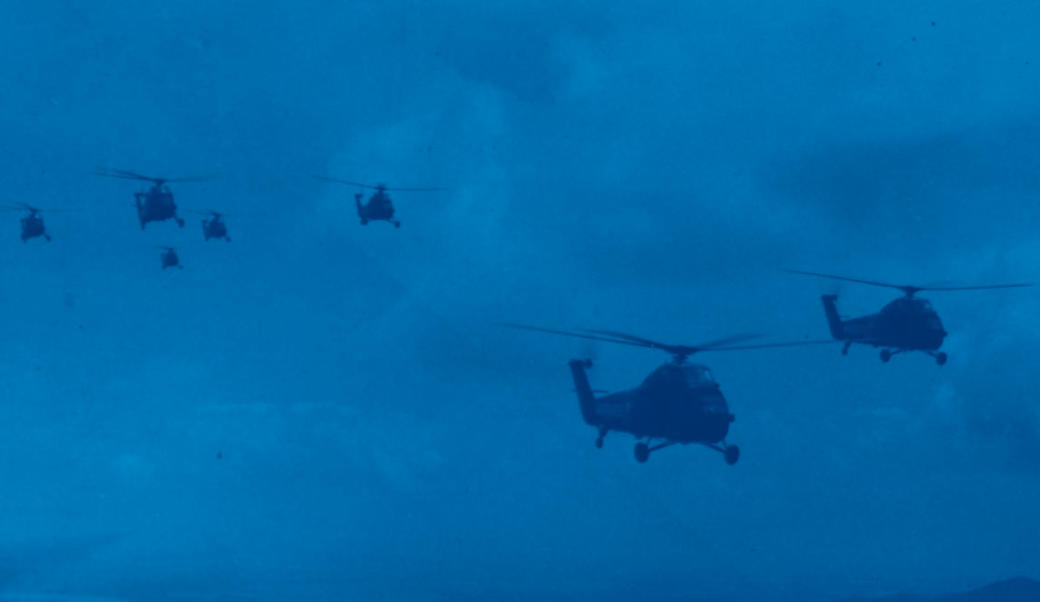
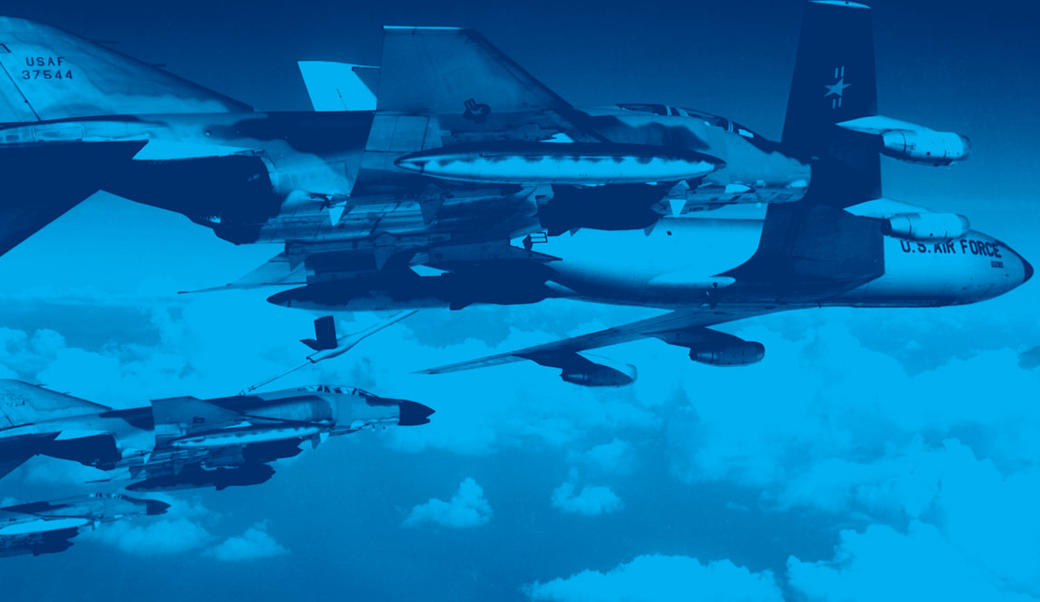
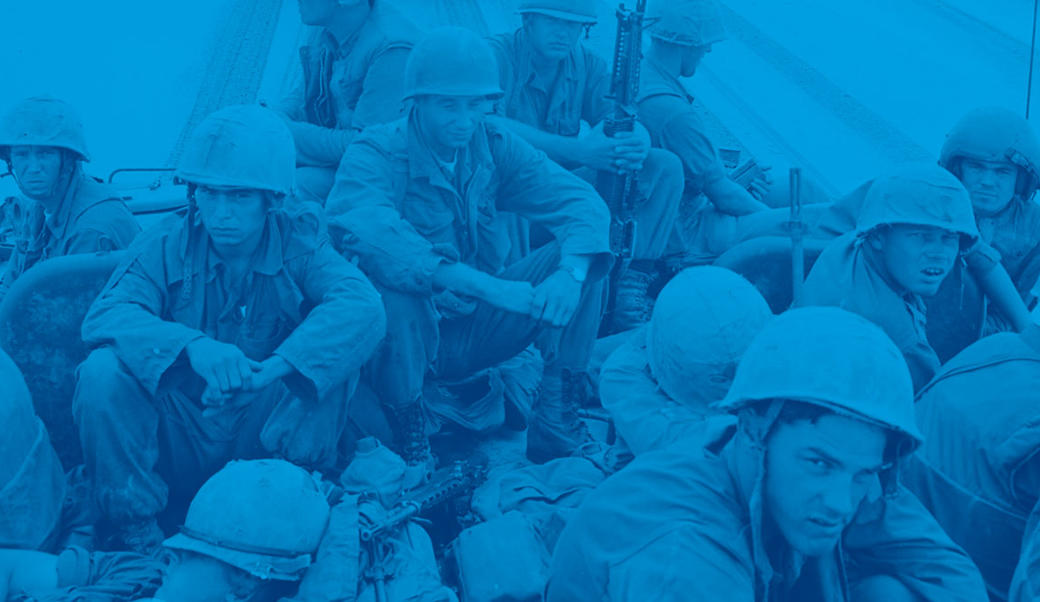
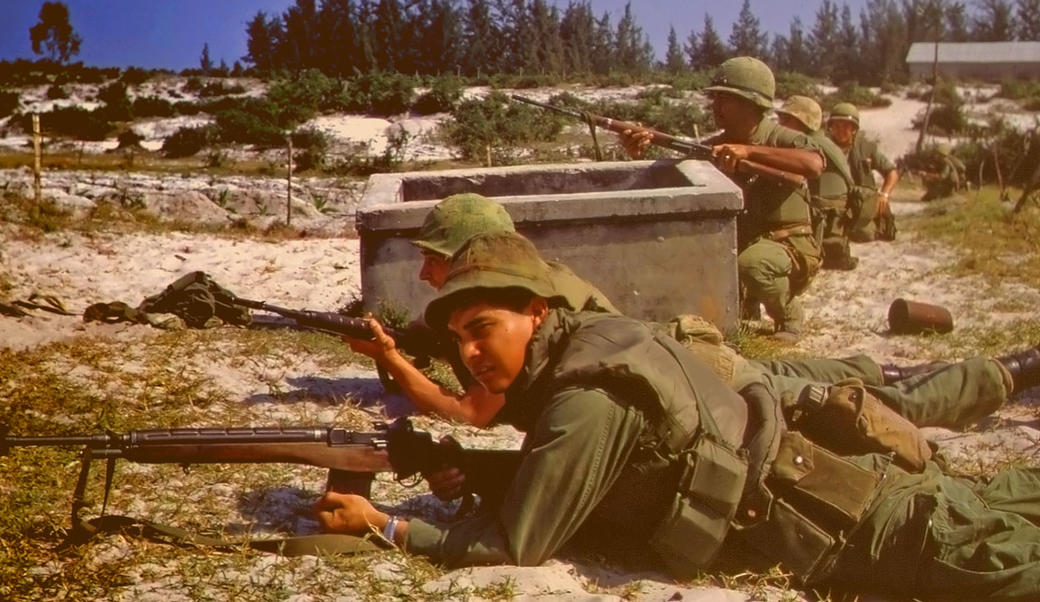
On February 13, 1965, Johnson authorized Operation Rolling Thunder, the sustained bombing of North Vietnam, to disrupt supply routes that were helping the communist insurgency and to pressure Hanoi into negotiations. On March 8, 1965, two Marine battalions, 3,500 troops, went ashore near Da Nang to protect the U.S. air base, with orders to shoot only if shot at—the first time U.S. combat forces had been sent to mainland Asia since the Korean War.
On April 1, Johnson authorized two additional Marine battalions, one Marine air squadron, and an increase in logistical support units of 20,000 men. He also authorized troops to go on active "search and destroy" missions. By mid-April, Marines had moved to full-scale offensive operations. By November 1965, there were more than 175,000 troops and by 1966, an additional 100,000. The number surged to 536,000 by the end of Johnson's presidency.
Johnson's decisions were based on complicated political and military considerations. The "hawks" in Congress and in the military wanted him to engage in massive bombing of enemy cities, threaten to use nuclear weapons, and even threaten to invade North Vietnam. But Johnson was reluctant because these actions might have led the Chinese or the Soviets to enter into the war. The "doves" in Congress, the State Department, and even Vice President Hubert Humphrey wanted Johnson to negotiate with Hanoi for a "neutral" South Vietnam and eventual reunification with the North.
LBJ steered a middle course: the president's "middle way" involved a commitment of U.S. ground forces and punishing bombing campaigns, both designed to convince the regime in North Vietnam that it could not win so that peace negotiations might ensue. One of Johnson's major problems was that Hanoi was willing to accept the costs of absorbing the punishing bombing and continuing the war indefinitely. It would do so until the United States decided to give up its commitment to aid South Vietnam. Secretary of Defense Robert McNamara and his "war game" analysts in the Department of Defense failed to account adequately for this eventuality.
Battles at Home
The Vietnam War began to split American society. As so-called "hawk" and "dove" contingents took to constant, bitter debate over the war, antiwar activists began to demonstrate publicly against their country's involvement in the conflict. The war cut short the promise of the Great Society and drained both government finances and Johnson’s political support.
Democrats took large losses in the midterm elections of 1966, though they retained majorities in the House and Senate. By late 1966, Johnson could no longer get most of his domestic measures through Congress. In late 1967, another Democrat, Senator Eugene McCarthy of Minnesota, did something all but unheard of: he announced his intentions to try to wrest the nomination from an incumbent wartime president in the 1968 election.
In late January 1968, the Tet Offensive delivered a hammer blow to the Johnson presidency. The North Vietnamese, shrewdly discerning that America was losing heart for the endless bloodletting, staged dozens of near-suicidal attacks all over the south, attacking provincial capitals, large cities, and various government sites, including the U.S. embassy in Saigon. The offensive aimed to inflict great casualties, collapse the Saigon regime, sap morale, and force the United States to concede.
Although the North Vietnamese lost many more soldiers than the United States and South Vietnam, the Tet Offensive caused a surge in American opposition to the war. The North Vietnamese Army was never able to defeat U.S. forces on the battlefields of Vietnam, but Hanoi's strategy defeated America's will to continue to escalate the war. Television screens brought images of endless and seemingly pointless battles to living rooms across the nation. Respected broadcast news anchor Walter Cronkite declared the war an unwinnable stalemate. Although Americans still supported the goal of a noncommunist South Vietnam, Johnson's popularity continued to decline sharply.
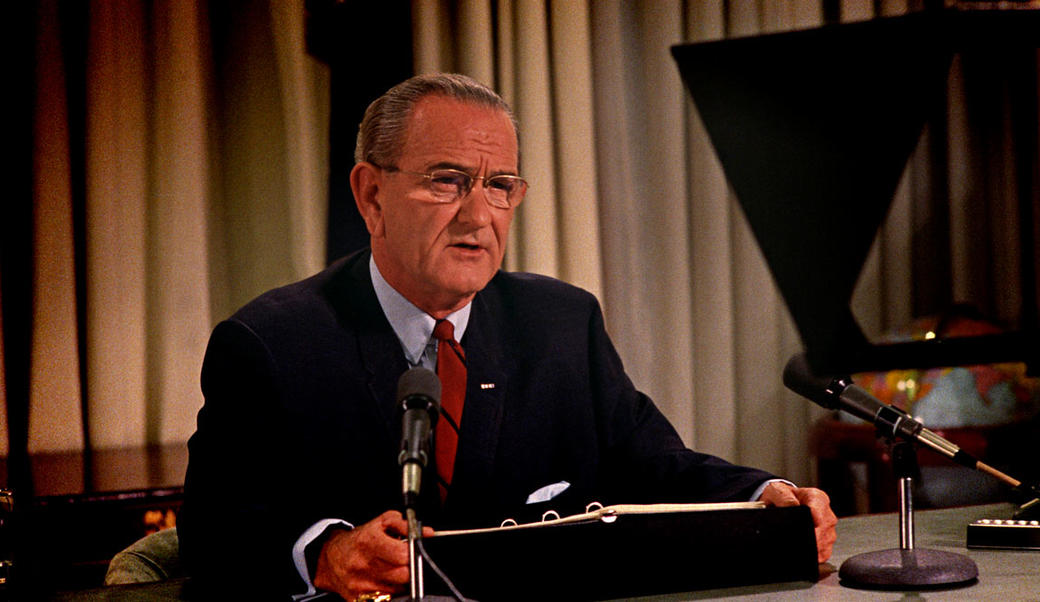
The president therefore went into the early 1968 presidential primaries utterly vilified by those opposed to the Vietnam War. He complained to his cabinet that the only place he could give a campaign speech now was on an aircraft carrier. Six weeks after the start of the Tet Offensive came New Hampshire, the site of the first presidential primary. McCarthy ran astoundingly well against the beleaguered president, winning 42 percent of the vote; John F. Kennedy's brother Robert entered the race four days later. On March 31, 1968, President Johnson stunned the nation by announcing that he would not seek another term as president but instead would concentrate on securing peace talks with North Vietnam.
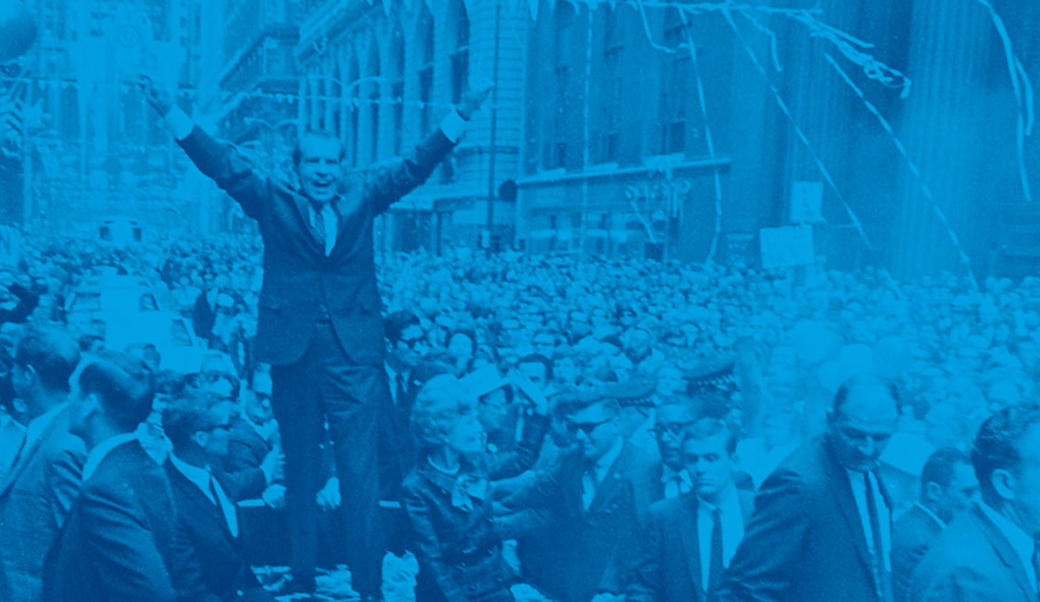
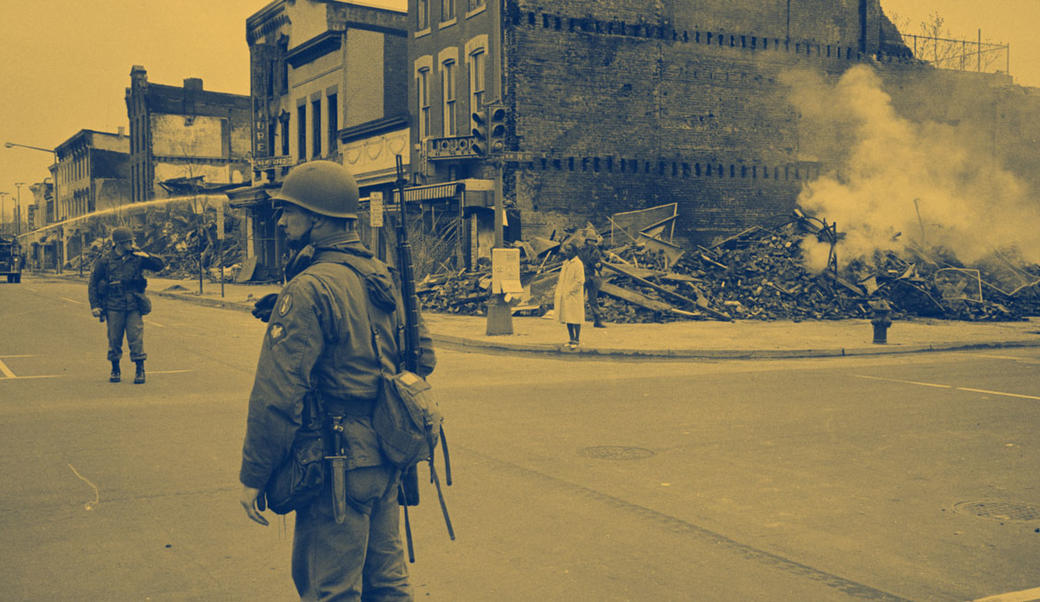
A terrible spring and summer ensued. The murders of Martin Luther King, Jr. and Robert Kennedy and a bloody confrontation between police and protesters at the Democratic Convention in Chicago sent shock waves through the nation. Just days before the elections, Johnson announced a total halt in the bombings of North Vietnam; the move reflected Hanoi’s acceptance of key terms for a bombing halt, but to voters at home, it looked like a desperate attempt to portray his administration—and the Democrats—as peacemakers. It came to no avail, as the Republican nominee, Richard Nixon, won the presidency, defeating the Democratic nominee, Hubert Humphrey. Meanwhile, the war dragged on.
Superpower Diplomacy
Although the Vietnam War colored Johnson's relationship with the Soviets, the president nonetheless made some progress on arms control. In January 1967, the United States, along with the Soviet Union and the United Kingdom, signed the Outer Space Treaty, which banned nuclear weapons in earth orbit, on the moon or other planets, or in deep space. In 1968, the United States joined other countries as a party to the Nuclear Nonproliferation Treaty, which prohibits the transfer of nuclear weapons to other nations and bars other nations from joining the "nuclear club."
President Johnson was able to defuse one potential nuclear crisis: In 1967, after the Six-Day War, when Israel defeated Egypt, Jordan, and Syria, the president met with Soviet Premier Aleksei Kosygin in Glassboro, New Jersey, to discuss conflicting U.S. and Russian interests in the Middle East. The two sides agreed to try to defuse tensions in the area.
Relations in Latin America
Early in his presidency, Johnson faced a series of minor crises in Latin America, all of which he handled to maximize U.S. influence and diminish communist influence in the region. In January 1964, Panamanians rioted against U.S. control of the Panama Canal Zone. Johnson dealt firmly with the violence, but after it ended, he agreed to discuss reconsidering the Panama Canal Treaties.
The next month, the U.S. Coast Guard seized four Cuban fishing boats and arrested its crew for illegally fishing near Florida. Fidel Castro, the Cuban communist dictator, responded by cutting off water to the U.S. Guantanamo Naval Base. Johnson had the Navy create its own water supply, and the Cubans backed down.
A major blemish on Johnson's record in the region occurred in the Dominican Republic. In 1962, Juan Bosch was elected president of the Dominican Republic, but by September 1963, he was overthrown in a military coup and replaced by a military junta, headed by Donald Reid Cabral, an unpopular right-wing, pro-U.S. politician.
When violence broke out between various factions in the country, Johnson sent in 400 Marines, who landed on April 28, 1965. By mid-May, that number had grown to more than 20,000 Marines. Eventually troops from the Organization of American States replaced the Marines. But Johnson had not simply sent in forces to protect American lives and property; he had done so to quell what he described as "a band of communist conspirators." The charge generated significant pushback at home and led to the emergence of a “credibility gap” between the administration’s pronouncements and realities on the ground. Johnson said he had acted to prevent "another Cuba" on the U.S. doorstep, but the move was highly unpopular in Latin America because of the history of U.S. intervention in the region.