Lyndon B. Johnson: Domestic Affairs
The Lyndon Johnson presidency marked a vast expansion of the role of the federal government in domestic affairs. By winning the election of 1964 in a historic landslide, LBJ proved to the country that he had not merely inherited the White House; he had earned it. The election's mandate provided the justification for Johnson's extensive plans to remake America. Large Democratic majorities in the House and Senate, along with Johnson's ability to deal with powerful, conservative southern committee leaders, created a promising legislative environment for the new chief executive.
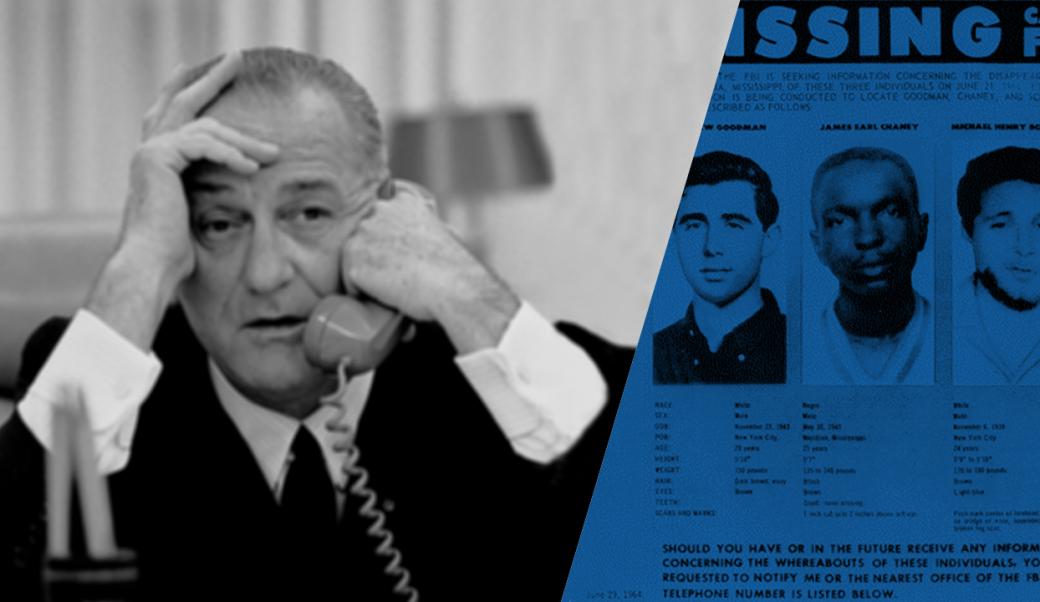
Before Johnson began to implement his ambitious domestic agenda, he worked to pass legislation that President Kennedy had proposed before his assassination. Johnson wanted the country to honor Kennedy’s memory and preserve his legacy by pushing it through. In February 1964, Johnson signed the Revenue Act, cutting taxes to help spur economic growth. In July, he signed the Civil Rights Act that ended segregation in public facilities and employment, following through on Kennedy’s commitment.
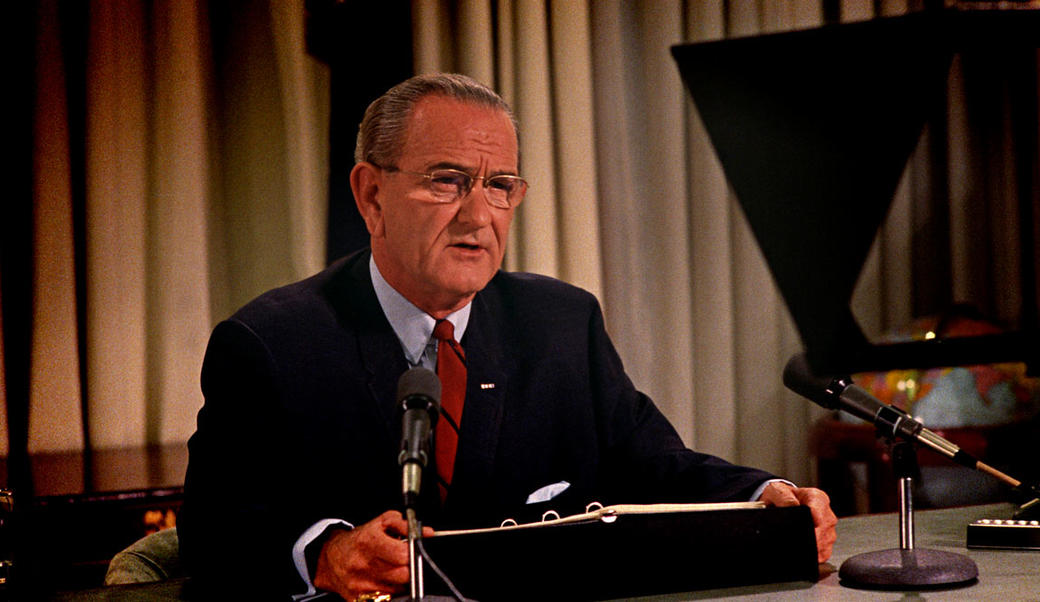
President Johnson laid out his own vision in a commencement speech at the University of Michigan on May 22, 1964. He called on the nation to move not only toward "the rich society and the powerful society, but upward to the Great Society," which he defined as one that would "end poverty and racial injustice." The speech focused on three main areas: revitalizing cities, protecting nature, and reforming education. To that end, the national government would set policies, establish "floors" of minimum commitments for state governments to meet, and provide additional funding to meet these goals.
The Great Society
With the Great Society, Johnson focused on bringing support to underprivileged Americans, regulating natural resources, and protecting American consumers. The 89th Congress (1965-1967) passed major legislation for environmental protection and landmark land conservation measures. In October 1965, at the base of the Statue of Liberty, Johnson signed the profoundly influential Immigration and Nationality Act, which phased out quotas based on national origin and prioritized immigrants based on preference categories, such as family reunification and occupation. He pushed bills establishing the National Endowment for the Arts, the National Endowment for the Humanities, and the Corporation for Public Broadcasting, and a bill to provide consumers with some protection against shoddy goods and dangerous products.
President Johnson believed in the transformative power of education and wanted to increase federal funding to address issues of inequality in education. The Johnson administration focused on federal aid for elementary and secondary education, especially to provide remedial services for poorer districts, a program that no president had been able to pass because of the disputes over aid to parochial schools. Johnson managed to forge a compromise that focused on providing funds based on students, rather than schools; the measure provided some federal funds to parochial schools but the majority of the funds focused on public schools. In April 1965, the president signed the Elementary and Secondary Education Act at the one-room schoolhouse between Stonewall and Hye, Texas, that he had attended as a child. With him was Kate Deadrich Looney, his teacher when he was four years old.
He then turned his attention to higher education to help accommodate the baby boomers who were starting to enter college and universities. The Higher Education Act increased federal funding to colleges and universities to improve their libraries and general operations and to provide scholarships, work-study programs, and low-interest loans to help young people afford college. The president signed this legislation in November at the Southwest Texas State College in San Marcos, Texas.
To deal with escalating problems in urban areas, Johnson won passage of a bill establishing the Department of Housing and Urban Development and appointed Robert Weaver, the first African American to serve in a presidential cabinet, to head it. The department coordinated vastly expanded slum clearance, public housing programs, and economic redevelopment within inner cities. LBJ also pushed through the Highway Beautification Act, which the first lady had championed.
President Johnson had tried to continue efforts from the administration of Harry S. Truman to pass a bill to cover health care for senior citizens in 1964, but the bill was unsuccessful in moving through Congress. After his landslide election, Johnson returned to the effort, and eventually won passage of the Social Security Amendments Act of 1965, which created Medicare and Medicaid. Medicare was a program providing federal funding of many health care expenses for senior citizens. The "medically indigent" of any age who could not afford access to health care were covered under a related Medicaid program funded in part by the national government and run by states under their welfare programs.
The War on Poverty
One of the central pillars of Johnson’s Great Society was the War on Poverty, which he introduced in his State of the Union speech in January 1964. He noted, “This administration today, here and now, declares unconditional war on poverty in America. I urge this Congress and all Americans to join with me in that effort.” The War on Poverty was also one of the most controversial parts of his domestic program.
LBJ's call on the nation to wage a war on poverty arose from the ongoing concern that America had not done enough to provide socioeconomic opportunities for the underclass. Statistics revealed that although the proportion of the population below the "poverty line" had dropped from 33 to 23 percent between 1947 and 1956, this rate of decline had not continued; between 1956 and 1962, it had dropped only another 2 percent. Additionally, during the Kennedy years, the actual number of families in poverty had risen. Most ominous of all, the number of children on welfare, which had increased from 1.6 million in 1950 to 2.4 million in 1960, was still going up.
Johnson imbued his rhetoric on behalf of the War on Poverty with moral urgency and traveled to the Appalachian region and other areas to promote his ideas. He told an audience at Rocky Mount, North Carolina on May 7, 1964: “I have come here to ask you to join the fight to build a great society in our land. Do something we can be proud of. Help the weak and the meek. Lift them up. Help them train and give them an education where they can make their own way instead of having to live off the bounty of our generosity.”
President Johnson chose Sargent Shriver, brother-in-law of John Kennedy and head of the Peace Corps, to oversee the War on Poverty. Within six months, the task forces had come up with plans in which the Community Action Program would establish an agency—known as a Community Action Agency (CAA)—in each city and county to coordinate all federal and state programs designed to help the poor. Each CAA was required to have "maximum feasible participation" from residents of the communities being served to empower them. The CAAs in turn would supervise agencies providing social services, mental health services, health services, employment services, and so on.
In August 1964, Congress passed the Economic Opportunity Act, which focused on a variety of fronts: it established the Office of Economic Opportunity to coordinate the War on Poverty; set up plans for the Community Action Program with CAAs; created Job Corps, a job training program for youths, and a domestic peace corps, known as Volunteers in Service to America (VISTA) . Republicans voted in opposition, claiming that the measure would create an administrative nightmare, and that Democrats had not been willing to compromise with them. Thus, the War on Poverty began on a sour, partisan note.
Soon, some of the local CAAs became embroiled in controversy. Local community activists wanted to control the agencies and fought against established city and county politicians intent on dominating the boards. Since both groups were important constituencies in the Democratic Party, the "war" over the War on Poverty threatened party stability. President Johnson asked Vice President Hubert Humphrey to mediate between community groups and government officials, but the damage was already done.
Democrats were sharply divided, with liberals calling for a greater financial commitment—Johnson was spending about $1 billion annually—and conservatives calling to give more control to established politicians. Meanwhile, Republicans charged that local CAAs were run by "poverty hustlers" more intent on lining their own pockets than on alleviating the conditions of the poor.
By 1967, Congress had given local governments the option to take over the CAAs, which significantly discouraged tendencies toward radicalism within the Community Action Program. By the end of the Johnson presidency, more than 1,000 CAAs were in operation, and the number remained relatively constant into the twenty-first century, although their funding and administrative structures were dramatically altered—they largely became limited vehicles for social service delivery.
Other War on Poverty initiatives fared better. These include the Head Start program of early education for poor children; the Legal Services Corporation, providing legal aid to poor families; and various health care programs run out of neighborhood clinics and hospitals.
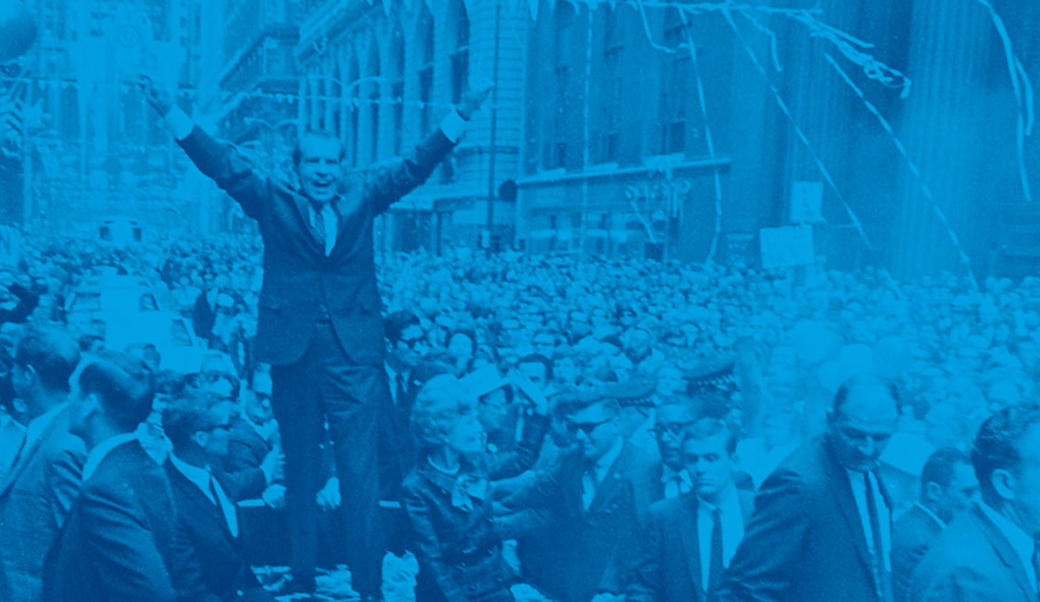
Overall government funding for the poor increased greatly. Between 1965 and 1968, expenditures targeted at the poor doubled, from $6 billion to $12 billion, and then doubled again to $24.5 billion by 1974. The billions of dollars spent to aid the poor did have effective results, especially in job training and job placement programs. Partly as a result of these initiatives—and also due to a booming economy—the rate of poverty in America declined significantly during the Johnson years. Millions of Americans raised themselves above the poverty line, and the percentage under it declined from about 20 to 12 percent between 1964 and 1974. Nevertheless, the controversy surrounding the War on Poverty hurt the Democrats, contributing to their defeat in 1968 and engendering deep antagonism from racial, fiscal, and cultural conservatives.
Civil Rights and Race Relations
President Johnson had grown up under the system of "Jim Crow" in which whites and blacks were segregated in all public facilities: schools, hotels and restaurants, parks and swimming pools, hospitals, and so on. Yet Johnson was a moderate on race issues and believed strongly in securing civil rights for African Americans. When Johnson assumed the presidency, he was heir to the commitment of the Kennedy administration to pass a civil rights bill.
As a result of his personal leadership and lobbying with key senators, the president forged a bipartisan coalition of northern and border-state Democrats and moderate Republicans. These senators offset a coalition of southern Democrats and right-wing Republicans, and Congress passed the Civil Rights Act of 1964. It made segregation by race illegal in public accommodations involved in interstate commerce—in practice this would cover all but the most local neighborhood establishments. It also created the Equal Employment Opportunity Commission to prevent employment discrimination.
The following year, civil rights activists turned to another issue: the denial of voting rights in the South. Since the 1890s, blacks had been denied access to voting by state laws that local voting registrars administered in a racially discriminatory manner. These included (1) literacy tests which could be manipulated so that literate blacks would fail and barely literate or illiterate whites might pass; (2) "good character" tests which required existing voters to vouch for new registrants and which meant, in practice, that no white would ever vouch for a black applicant; and (3) the "poll tax" which discriminated against poor people of any race. In 1964, the 24th Amendment to the U.S. Constitution eliminated the poll tax, which left the literacy test as the major barrier.
In 1965, civil rights activists organized marches from Selma, Alabama, to the state capital of Montgomery, to bring attention to voting rights for blacks. During the first attempt on March 7, state troopers attacked the nonviolent demonstrators with police dogs and beat them bloody. “Bloody Sunday,” as it became known, was shown on national television and sparked national outrage.
In response to public revulsion, Johnson seized the opportunity to propose the Voting Rights Act of 1965. This legislation provided for a suspension of literacy tests in counties where voting rates were below a certain threshold, which in practice covered most of the South. It also provided for federal registrars and marshals to enroll African American voters. Congress passed the law, and President Johnson signed it on August 6, 1965.
The results were immediate and significant. Black voter turnout tripled within four years, coming very close to white turnouts throughout the South. Blacks entered the previously "lily white" southern Democratic Party, forging a biracial coalition with white moderates. Meanwhile, many white conservatives left the Democratic Party, due to their opposition to Johnson's civil rights legislation and liberal programs. Many of these former Democrats joined the Republican Party. The result was the development of a vibrant two-party system in southern states—something that had not existed since the 1850s.
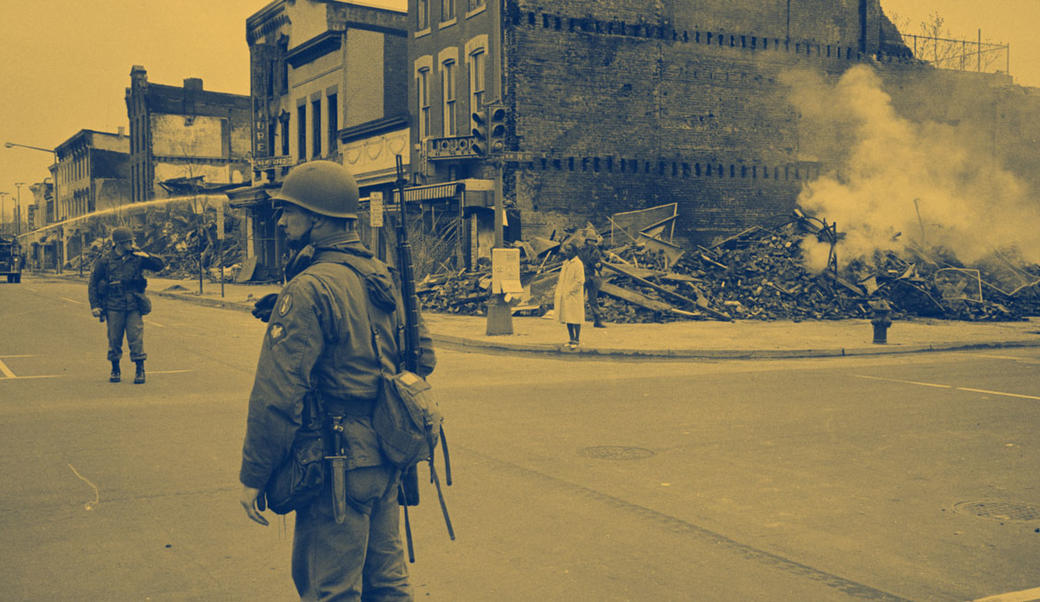
Even with these measures, racial tensions increased. Black Americans did not believe that the civil rights measures championed by the president were sufficient to challenge the racism and discrimination they encountered in their lives. Between 1964 and 1968, race riots shattered many American cities, with federal troops deployed in Los Angeles, California, as well as in Detroit, Michigan, and Washington, D.C.
In response, President Johnson appointed the Kerner Commission in July 1967 to delve into the causes of this unrest. The commission reported back that America had rapidly divided into two societies, "separate and unequal." It blamed inequality and racism for the riots that had swept American cities. Johnson largely rejected the findings of the commission as too radical.
In Memphis, Tennessee, in April 1968, a lone assassin gunned down Martin Luther King Jr., one of the leaders of the civil rights movement. King’s tragic assassination renewed momentum for a bill outlawing racial discrimination in housing that had been languishing in Congress. With Johnson determined to see it pass, Congress bowed to his will. The resulting law began to open up more housing to minority residents, though it would be several decades before segregated housing patterns would be noticeably dented.
Although the Great Society, the War on Poverty, and civil rights legislation all would have a measurable and appreciable benefit for the poor and for minorities, their impact was muted by foreign affairs. By 1968, with his attention focused on the Vietnam War, the president's efforts to fashion a Great Society had come to an end.
In Doris Kearns’ book, Lyndon Johnson and the American Dream, Johnson told the author: “If I left the woman I really loved—the Great Society—in order to get involved with that bitch of a war on the other side of the world, then I would lose everything at home. All my programs. All my hopes to feed the hungry and shelter the homeless. All my dreams to provide education and medical care to the browns and the blacks and the lame and the poor. But if I left that war and let the Communists take over South Vietnam . . . there would follow in this country an endless debate—a mean and destructive debate—that would shatter my Presidency, kill my administration, and damage our democracy.”