Experts

Todd Sechser

Fast Facts

  • Professor of politics and public policy at the University of Virginia
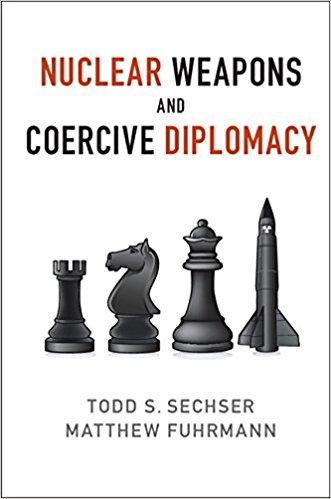
  • Coauthor of Nuclear Weapons and Coercive Diplomacy
  • Nonresident scholar, Nuclear Policy Program, Carnegie Endowment for International Peace
  • Expertise in international relations, foreign policy, nuclear security, emerging technologies

Areas Of Expertise

  • Foreign Affairs
  • American Defense and Security
  • War and Terrorism
  • World Happenings

Todd S. Sechser is professor of politics and a faculty senior fellow at the Miller Center of Public Affairs at the University of Virginia. He is also a nonresident scholar in the Nuclear Policy Program at the Carnegie Endowment for International Peace. His research focuses on coercive diplomacy, nuclear security, emerging military technologies, and foreign policy.

Sechser is coauthor of Nuclear Weapons and Coercive Diplomacy (Cambridge University Press) and coeditor of Emerging Technologies and International Stability (Routledge). His work has appeared in the American Journal of Political Science, International Organization, International Studies Quarterly, Journal of Conflict Resolution, Journal of Experimental Psychology: Applied, and the Journal of Strategic Studies, among other journals, and his policy writing has been published in The Washington Post, The Wall Street Journal, Boston Globe, and other media venues. He previously directed the multi-university Program on Strategic Stability Evaluation, a nuclear strategy study group, and was the founding director of the UVA Karsh Institute’s Democratic Statecraft Lab.

Secher's research has been supported by the Carnegie Corporation of New York, the U.S. Air Force, and the Stanton Foundation, and he regularly consults for several government and military agencies.

Sechser was previously a Stanton Nuclear Security Fellow at the Council on Foreign Relations and a postdoctoral fellow at the Olin Institute for Strategic Studies at Harvard University. He received his PhD in political science from Stanford University, where his dissertation won the Walter Isard Award for the Best Dissertation in Peace Science. Before entering academia, Sechser worked as a nuclear policy analyst at the Carnegie Endowment for International Peace.

He has received multiple awards for teaching, including the All-University Teaching Award and the inaugural Cory Family Teaching Award. He currently directs the Politics Honors Program.

Todd Sechser News Feed

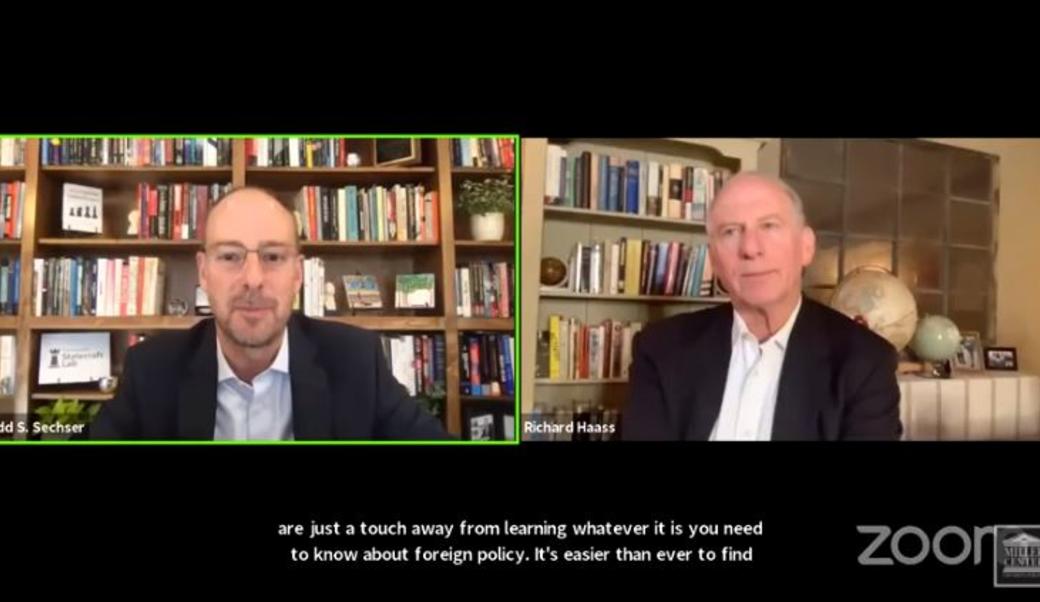
In this conversation, Richard Haass, veteran diplomat and the current president of the Council on Foreign Relations, talks with Todd Sechser of the Democracy Initiative's Statecraft Lab about his new book The World: A Brief Introduction, which aims to navigate a time in which many of our biggest challenges come from the world beyond our borders.
Todd Sechser Miller Center Presents
American foreign policy stands at a crossroads. Confronted with authoritarian rivals, a global pandemic, and turmoil at home, the United States faces a critical choice about its future role in the world. As the 2020 election approaches, the University of Virginia Democracy Initiative's Democratic Statecraft Lab is hosting a webinar to grapple with these questions. First, New America's Anne-Marie Slaughter and Harvard's Stephen Walt face off in a debate about America's role in the world. Then, NPR's Mary-Louise Kelly interviews Michael McFaul, former U.S. ambassador to Russia, about challenges dealing with that nation. The event is moderated by Todd Sechser, professor of politics, director of the Democratic Statecraft Lab, and Miller Center faculty senior fellow.
Todd Sechser Miller Center Presents
How the United States has handled and continues to handle the pandemic has implications far beyond U.S. borders, affecting policy and power struggles around the world, according to Todd Sechser, the Pamela Feinour Edmonds and Franklin S. Edmonds Jr. Discovery Professor of Politics at the University of Virginia.
Todd Sechser UVA Today
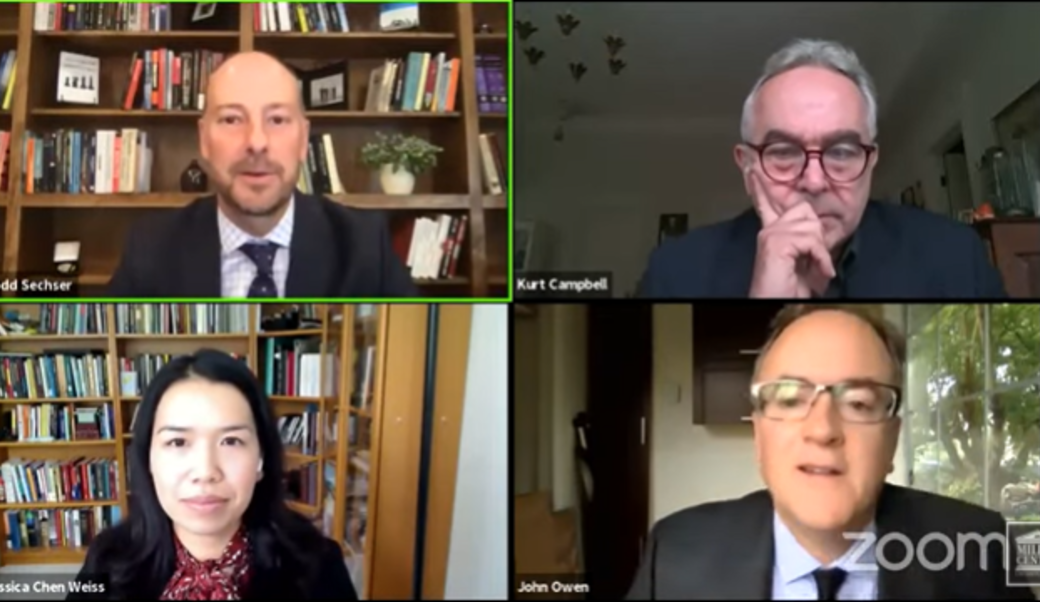
How has the COVID-19 crisis affected the emerging rivalry between the United States and China? Has the pandemic sharpened great power competition, or highlighted the need for mutual cooperation? Miller Center experts Todd Sechser and John Owen join former assistant secretary of state for East Asian and Pacific Affairs Kurt Campbell, Nanjing University China expert Zhu Feng, and and Cornell University China scholar Jessica Chen Weiss to consider how the international order has been reshuffled by the pandemic, and who could emerge in a stronger position once the crisis subsides.
Todd Sechser Miller Center Presents
The Cold War nuclear arms race presents a puzzle. Why would states, even fierce rivals like the United States and the Soviet Union, keep building nuclear weapons after they each had the ability to blow up the world several times over? Yet this is exactly what the superpowers did during the second half of the Cold War. Moscow and Washington waged a fierce nuclear competition featuring ever more innovative weapons and war plans that were as baroque and complicated as they were ferocious and aggressive. Even more strikingly, each side waged this competition while investing enormous effort in arms control negotiations. As great power rivalry returns to the forefront of world politics, the same incentives that produced the late Cold War nuclear arms race may well arise again. Understanding the Cold War’s lessons about the bomb could be critical to managing nuclear dangers today.
Todd Sechser Miller Center Presents
Former ambassadors Eric Edelman, a Miller Center senior fellow, and Steve Mull, UVA's vice provost for global affairs, agree that Iran has been waging a "sub-conventional" war against the United States for years.
Eric Edelman