Fast Facts
- Professor of politics and public policy at the University of Virginia
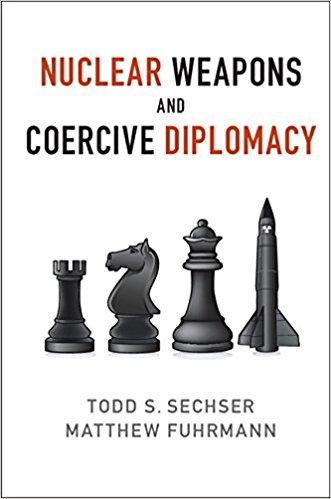
- Coauthor of Nuclear Weapons and Coercive Diplomacy
- Nonresident scholar, Nuclear Policy Program, Carnegie Endowment for International Peace
- Expertise in international relations, foreign policy, nuclear security, emerging technologies
Areas Of Expertise
- Foreign Affairs
- American Defense and Security
- War and Terrorism
- World Happenings
Todd S. Sechser is professor of politics and a faculty senior fellow at the Miller Center of Public Affairs at the University of Virginia. He is also a nonresident scholar in the Nuclear Policy Program at the Carnegie Endowment for International Peace. His research focuses on coercive diplomacy, nuclear security, emerging military technologies, and foreign policy.
Sechser is coauthor of Nuclear Weapons and Coercive Diplomacy (Cambridge University Press) and coeditor of Emerging Technologies and International Stability (Routledge). His work has appeared in the American Journal of Political Science, International Organization, International Studies Quarterly, Journal of Conflict Resolution, Journal of Experimental Psychology: Applied, and the Journal of Strategic Studies, among other journals, and his policy writing has been published in The Washington Post, The Wall Street Journal, Boston Globe, and other media venues. He previously directed the multi-university Program on Strategic Stability Evaluation, a nuclear strategy study group, and was the founding director of the UVA Karsh Institute’s Democratic Statecraft Lab.
Secher's research has been supported by the Carnegie Corporation of New York, the U.S. Air Force, and the Stanton Foundation, and he regularly consults for several government and military agencies.
Sechser was previously a Stanton Nuclear Security Fellow at the Council on Foreign Relations and a postdoctoral fellow at the Olin Institute for Strategic Studies at Harvard University. He received his PhD in political science from Stanford University, where his dissertation won the Walter Isard Award for the Best Dissertation in Peace Science. Before entering academia, Sechser worked as a nuclear policy analyst at the Carnegie Endowment for International Peace.
He has received multiple awards for teaching, including the All-University Teaching Award and the inaugural Cory Family Teaching Award. He currently directs the Politics Honors Program.
Featured Publications
Todd Sechser News Feed